
Waterbury Motorcycle Accident Lawyer
A motorcycle rider has little protection from the impacts of a crash. They have no vehicle body, no airbag, and no crumple zone. The same impact that leaves a car driver shaken can cause catastrophic injuries to a biker. Meanwhile, insurers often blame the rider due to unjustified bias.
If you have been hurt in a motorcycle accident in Waterbury, Rob Levine Law has got your back. Our Waterbury motorcycle accident lawyers will investigate what happened, gather evidence, deal with the insurance company, fight back against the stigma, and pursue the full compensation you’re owed.
Find out what your case is worth.
Home » Waterbury Law Firm » Waterbury Motorcycle Accident Lawyer

Last Updated:
November 6, 2026
Table of Contents
- How Our Waterbury Motorcycle Accident Lawyers Build Your Claim
- How Is Fault Determined After a Waterbury Motorcycle Crash?
- What Can You Recover After a Motorcycle Accident?
- How Connecticut Motorcycle Laws Can Affect Your Claim
- Why Riders Choose Rob Levine Law as Their Waterbury Motorcycle Accident Attorney
- Waterbury Motorcycle Accident FAQs
How Our Waterbury Motorcycle Accident Lawyers Build Your Claim
The bike itself is often some of the best evidence in a motorcycle accident case. It can also be one of the first things to disappear. An insurer may authorize a salvage yard to scrap a damaged motorcycle within weeks, taking the scrape patterns, impact points, and damage profile with it.
Our Waterbury motorcycle accident lawyers act quickly to preserve key evidence before it is lost. We’ll obtain the police report, look for witnesses, request footage from nearby businesses and traffic cameras, and investigate how the collision actually happened.
Our Waterbury personal injury lawyers will handle all communications with the insurance company and shoulder the burden of the legal details while you focus on your recovery. We’ll keep you informed throughout the process, protect your rights, and pursue the compensation you deserve. We’re available to meet with you in person at our 15 Boyden St. office, remotely, or we can even come to you if necessary.

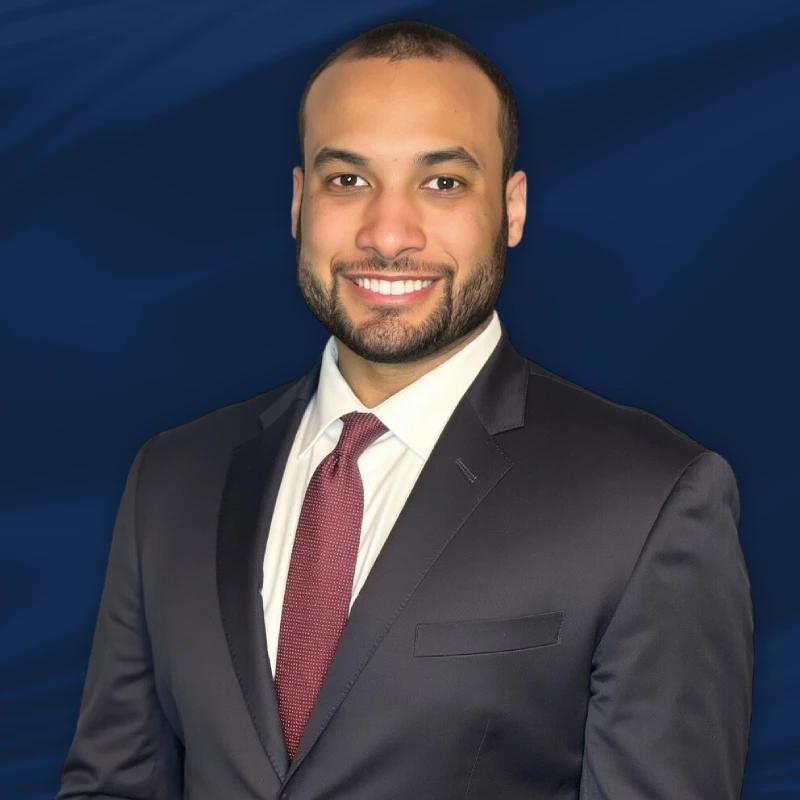
Veterans Disability Managing Attorney
Licensed in MA & CT; Accredited by the Dept. of Veterans Affairs



How Is Fault Determined After a Waterbury Motorcycle Crash?
Determining who is at fault for a motorcycle accident requires looking at the evidence rather than relying on assumptions about motorcyclists. Fault for a motorcycle accident depends on who caused the accident by failing to exercise reasonable care, not on the type of vehicle involved. Even so, insurers often try to shift blame by alleging the rider was speeding, weaving through traffic, or otherwise taking risks, even when there is no evidence to support those assumptions.
Thus, physical proof is crucial. Skid marks, vehicle damage, the vehicles’ resting positions after impact, video footage, and sightlines at the scene can tell a more reliable story than a driver’s recollection alone.
Even if the evidence establishes that you were partially at fault, you may still be able to recover compensation for your losses. Connecticut has a modified comparative fault system, under which you recover compensation as long as you are not more than 50% responsible for an accident. However, your recovery will be reduced by your share of the fault. You are only barred from recovering compensation if you are 51% or more to blame for the accident.
When a Driver Turns Across a Rider's Path
Some of the most serious motorcycle crashes happen when a driver turns left into a rider’s path. Often, the driver reaches an intersection, sees what appears to be a gap, and begins to turn without noticing an approaching motorcycle.
A driver must yield to oncoming vehicles before turning left across traffic. That duty does not change simply because the oncoming vehicle is a motorcycle. Waterbury’s Mixmaster interchange, where I-84 and Route 8 meet, sees roughly 190,000 vehicle trips a day, producing exactly the kind of conditions where these collisions tend to occur.
When a Driver Claims They Never Saw the Motorcycle
“The motorcycle came out of nowhere” is one of the most common explanations a rider hears after a collision. Simply failing to notice a motorcycle does not excuse the driver who caused the crash.
Drivers are expected to watch for motorcycles just as they would other vehicles. If a motorcycle was visible in the travel lane and a driver turned, merged, or changed lanes without seeing it, evidence from the scene can help establish what the driver should have been able to see. Headlight use, video footage, witness accounts, vehicle damage, and the driver’s line of sight may all become important when addressing a claim that the motorcycle appeared without warning.
What Can You Recover After a Motorcycle Accident?
Motorcycle injuries can be severe and may require a much longer recovery than someone initially expects. The recoverable compensation in a motorcycle accident case should cover both the immediate financial impact of the crash and losses that continue long after you leave the hospital.
Depending on the circumstances and your motorcycle accident injuries, you can generally pursue compensation for the following damages:
- Emergency and ongoing medical care: Compensation may cover hospital treatment, surgery, orthopedic care, physical therapy, and other treatment you reasonably need because of the crash.
- Lost income and earning capacity: A claim may account for income lost due to time missed from work, as well as reduced earning capacity when an injury creates lasting limitations.
- Motorcycle and gear damage: You may be able to recover the cost of repairing or replacing your motorcycle, helmet, riding gear, and other damaged property.
- Pain and suffering: You can pursue compensation for the physical pain and the lasting effects of an injury.
- Permanent scarring or disfigurement: You can seek compensation for road rash, burns, surgical scars, and other permanent changes.
Calculate the Value of Your Case
Use our free personal injury settlement calculator to determine how much your case may be worth. This calculator is designed to give you a value with a range based on thousands of case we have settled.
How Connecticut Motorcycle Laws Can Affect Your Claim
Motorcycle laws vary by state, with differing rules covering licensing requirements, helmet use, lane positioning, passing, and more, which may be relevant to an accident claim.
Connecticut requires all motorcycle riders under 21 to wear helmets. Riders of all ages must use daytime headlights and eye protection if they lack a windshield. State law also bans lane splitting, or the act of riding a motorcycle between vehicles in traffic.
In Connecticut, failing to wear a helmet does not automatically prevent you from recovering compensation after a crash. Insurers often argue that the lack of a helmet affected the severity of a head injury. Whether you can recover damages for an accident that occurred while you were riding without a helmet depends on the injuries and evidence involved.
Connecticut also imposes strict deadlines on motorcycle accident claims. The statute of limitations in Connecticut generally gives you two years from the date of injury to bring a personal injury claim. Different circumstances can affect the applicable deadline, making it important to determine the correct timeline early.
Why Riders Choose Rob Levine Law as Their Waterbury Motorcycle Accident Attorney
With more than 25 years of experience, Rob Levine Law has helped over 50,000 clients and recovered more than $2 billion in injury compensation and disability benefits. Let us put our experience to work for you. If you’ve been injured in a Waterbury motorcycle accident, you can count on us to aggressively advocate for your best interests while adhering to the strictest ethical standards.
You should always know what is happening with your case and what to expect next. We’ll keep you informed while we investigate the crash, deal with the insurance company, and pursue the compensation you are owed. Our commitment to our clients extends to transparent pricing, so we explain our fees before you decide to move forward. We handle personal injury cases on a 33% contingency fee, reduced to 25% for first responders, including police, fire, rescue, and military personnel. Win or No Fee™ with our Fee Free Guarantee®, meaning you do not owe attorney fees unless we recover compensation for you.
If you were injured while riding in Waterbury, call (888) 791-9135 or contact us online for a free consultation with a Waterbury motorcycle accident lawyer.
Hear From Our Satisfied Clients
Life-Changing Legal Advocacy That Delivers Result
When the commercials say they’re the Heavy Hitters, he’s telling the truth. Chris Lindberg is an actual godsend. They took one of the most complicated and stressful situations in my life and created a completely positive experience. God bless him and God bless Rob Levine.
Sean B.
Timely, Responsive, and Caring Legal Support
I had such a positive experience working with Attorney Kari Baum. From the very beginning, she was timely, responsive, and always kept me in the loop. Whenever I had a question, big or small, she responded quickly and made sure I understood exactly what was happening with my case. That level of communication made a huge difference and really put me at ease throughout the entire process.
Kari was professional, prepared, and clearly cared about the outcome of my case. I never felt like just another client, and that meant a lot. I would recommend her to anyone without hesitation. Thank you, Kari!
Brittany M.
Clear Communication and Exceptional Service
The staff at Rob Levine Law worked diligently and tirelessly to resolve my personal injury matter. They took care of all the details and won my case. I am grateful to Attorney Derrin Almada for his professional, cheerful service and for explaining everything to me in layman’s terms. Could not have asked for a better outcome!
Olivia L.
Waterbury Motorcycle Accident FAQs
What If the Driver Who Hit Me Had No Insurance?
If the at-fault driver has no insurance or not enough coverage for your losses, your policy’s uninsured or underinsured motorist coverage may apply. Because the claim may still involve negotiations with your own insurer, it is important to document your injuries and damages carefully.
What Happens to My Motorcycle While the Claim Is Pending?
Do not authorize the motorcycle to be scrapped before the crash has been fully investigated. Its damage pattern can provide important evidence about how the collision occurred. In some cases, preserving the motorcycle long enough for an inspection can help resolve disputes over fault.
The Police Report Says I Was Lane Splitting on I-84. Does That Automatically Prevent Me From Recovering?
No. While Connecticut generally prohibits a motorcyclist from passing another vehicle within the same lane, a violation does not automatically prevent you from recovering compensation. Liability will be apportioned under Connecticut’s comparative negligence law. If you are less than 51% at fault, you can still recover compensation, although the amount recoverable will be reduced by your share of the blame.
Get Your Free Consultation Now
"*" indicates required fields
Notable Case Results
$130,000
Defendant made a wide turn on Narragansett Parkway in Warwick, turning to wide to avoid hitting the front of our clients vehicle. Client had a stiff neck and back after the accident however the pain continued resulting in months of treatment. The case could not be settled and our litigation team had to tackle the file to get a successful result.
$125,000
Client was driving on 95 South in Warwick when they were rear ended by a defendant who did not slow down and hit our client going about 55 miles per hour. After months of physical therapy the client had an MRI that revealed small spinal fractures. This file was denied but our litigation team was able to get a settlement for the client.
$24,158
Client was rear ended. Allstate claimed low impact accident and denied any injuries. Our attorney filed suit and litigated the file, proving injuries even with a low impact, winning the case for our client.
$37,810
Jefferson Blvd in Warwick, our client who was 7 months pregnant was side swiped by a truck. Client was rushed to Woman and Infants Hospital in Providence where client was monitored as she began contractions. She also was treated for body pain. Car was a total loss
$300,000
Client was driving on Route 5 in Warwick near the Lowe’s. Defendant was pulling out of a parking lot and hit our clients motorcycle. Our client was thrown from the bike, slamming his head on the ground. He was rushed to the hospital. Our office settled the claim for policy limit. We recovered $240,000 for the client and an additional $60,000 for a loss of consortium claim for the clients spouse.
$50,000
Client was in Dicks Sporting Goods in Warwick RI. Client was walking in an isle and fell on plastic wire straps that were in the isle. Was taken from the store to Kent Hospital via ambulance. Had to have rotator cuff surgery
$55,000
Client was walking his dog in Warwick. During the walk a pitbull named Xavier started fighting with our clients dog. Our client broke up the fight between the dogs. Rescue came to scene along with police. Client was treated and released. The next day an infection formed causing the client to be hospitalized for 6 days.
$50,881
Client residing in Warwick RI could not work due to Seizure, Anxiety, Depression, Mood Disorder, Chronic Pain, Boderline Personality Disorder
$52,000
Client living in West Warwick suffering from headaches, PTSD, TBI, IBS and was a sexual victim during his time of army service in the early 2000s. Our firm won 52,000 in back benefits.
$575,000.00
Client was traveling east on Long Street in Warwick when the defendant, pulling out of a side street, ran a stop sign. The client attempted to stop but was unable to avoid hitting the passenger side of the defendant’s car. Our client was taken from the scene by rescue to Rhode Island Hospital, where he stayed for two days.
Making the Path to 100% VA Disability Simple
Hands down, the best decision I made was calling Rob Levine. I’m at 100% with my VA disability, and they made it simple and easy.
Josh F.
A 100% VA Rating with a Personal Touch
Rob Levine Law Firm has assisted me the entire way to becoming 100%, and they treat you like a person, not a commodity.
Jessie D
Fast, Thorough, and Informative Legal Support
They are very fast, thorough, informative, and professional. They really make me feel as if I’m part of their team. It was as if the insurance companies were against me, so I had to call a lawyer. I’m very happy to say that I chose Rob Levine Law.
S. G.
Clear Updates with Courteous Client Care
The experience was great. The team kept me informed and up to date with every step of the process. They are polite and well-mannered. If I ever need representation again, I hope they are available.
Lakia B.
Helpful Support Throughout the Legal Process
I have no complaint about the professionalism of this firm. My lawyers have been very helpful, and they give me peace of mind knowing that my cases are being handled well. Highly recommend it.
Noly R.
Expert Guidance That Stands Out
I had a great experience with Rob Levine Law handling my case. Their expertise was clearly above and beyond my expectations.
Jeffrey B.