
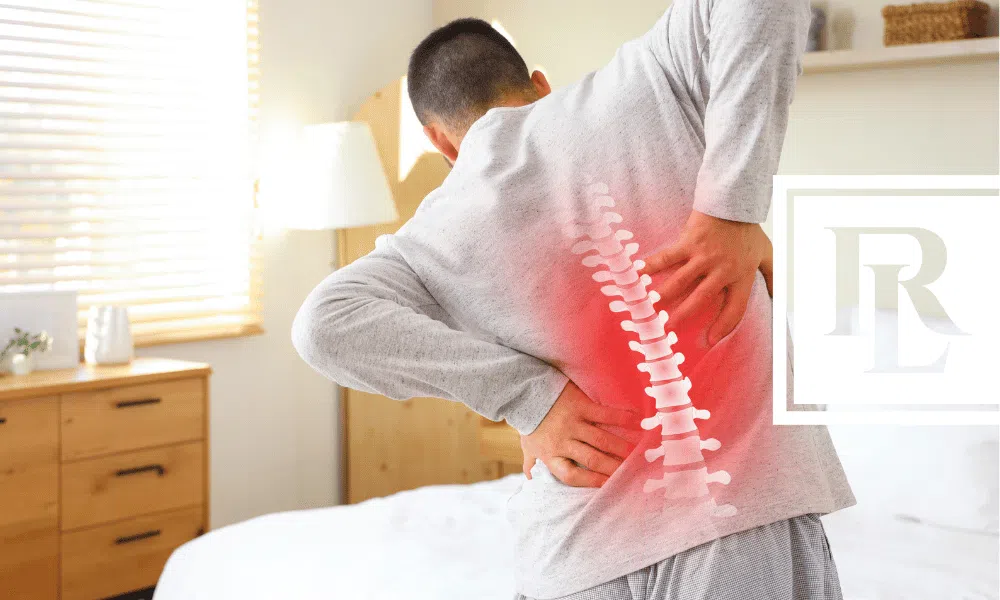

Whether it’s the result of an accident or wear and tear from years of heavy physical labor, back and spine conditions are common disabilities faced by veterans. If you’re a veteran dealing with a spinal injury related to your military service, you can apply for VA disability benefits, including monthly compensation. The Department of Veterans Affairs will evaluate your condition and assign a disability rating for your condition that determines the benefits you can receive.
If you need assistance with your VA benefits claim, the trusted veterans disability lawyers at Rob Levine Law are here to help. Contact us today for a free consultation.
How Does the VA Evaluate Back and Spine Conditions?
Generally, the VA’s disability rating for a spinal condition depends on the applicant’s range of motion and how much their pain affects their ability to function normally. The VA assesses the degree of ankylosis, or joint stiffness, to determine the extent to which the patient’s condition limits mobility.
“Unfavorable” ankylosis, in which the spine is stuck in a bent position, is typically considered the most disabling factor in a back condition. “Favorable” ankylosis, or when the spine is stuck in a straight posture, is less debilitating but still can lead to a disability rating.
During a compensation & pension exam, or C&P, the examining physician typically measures and observes an applicant’s range of motion, pain, weakness, and other symptoms that limit overall functioning.
What VA Disability Rating Can I Receive for a Back or Spine Condition?
Back injuries can receive the full range of VA disability ratings, with mild cases receiving as low as 10% and severe conditions qualifying as 100% disabling. The rating you’re assigned will determine the amount of monthly disability compensation you receive. The available ratings break down as follows:
10% VA Disability Rating for Back Conditions
Spinal conditions receive a 10% VA rating when the veteran has only mild symptoms. A 10% back injury may result in some pain, bent posture, or slightly limited range of motion.
20% VA Disability Rating for Back Conditions
Back conditions rated at 20% are still relatively mild but slightly more impactful. Criteria include worsened spinal bending, greater reduction in range of motion, or pain, weakness, or spasms that affect the patient’s gait or lead to conditions such as scoliosis.
30% VA Disability Rating for Back Conditions
The VA will assign a 30% disability rating if a back condition results in a forward bend of the neck or favorable ankylosis in the entire neck area, known as the cervical spine.
40% VA Disability Rating for Back Conditions
A 40% disability rating is assigned to back conditions where the entire cervical spine is affected by unfavorable ankylosis, or the full thoracolumbar spine, the area in the middle of your back, is affected by favorable ankylosis.
50% VA Disability Rating for Back Conditions
To qualify for a 50% disability rating, the back condition must result in unfavorable ankylosis affecting the entire thoracolumbar spine. At this level of severity, the patient’s condition likely presents a significant impediment to their daily function.
100% VA Disability Rating for Back Conditions
The VA will assign a full 100% disability rating for patients whose back conditions result in unfavorable ankylosis in their entire spine, causing severe functional impairment.
Which Back and Spine Conditions Can Qualify for VA Disability Benefits?
Any spinal condition linked to your military service that meets the VA’s criteria can qualify for VA disability benefits. Your service connection can be established directly or as a secondary condition, meaning it developed due to another service-related disability. In some cases, your back injury may be considered a presumptive condition, meaning the VA assumes it is connected to your service by default.
Back and spine conditions that may be eligible for VA disability include:
- Degenerative disc disease
- Degenerative arthritis of the spine
- Herniated discs
- Spinal stenosis
- Spondylolisthesis
- Sacroiliac joint dysfunction
- Ankylosing spondylitis
- Vertebral fractures and compression fractures
- Chronic lumbar strain
- Chronic cervical strain
Can Nerve Damage Raise My VA Disability Rating?
Even if you’re approved for VA disability benefits for your back condition, you may not know that neurological issues caused by your spinal injury can also qualify. You may be eligible for separate disability ratings for your secondary conditions, which can combine to form a higher overall disability rating and increase your total monthly compensation.
Common neurological secondary conditions that can develop from service-connected back injuries include:
- Radiculopathy
- Sciatica
- Numbness and tingling in the arms or legs
- Bowel dysfunction
- Bladder dysfunction
- Erectile dysfunction
How Can Rob Levine Law Help With My VA Back Injury Disability Claim?
Unfortunately, many VA disability applicants are denied the benefits they need. If your VA disability claim for your back injury was rejected, the trusted legal team at Rob Levine Law has the know-how to get you approved and secure the compensation you deserve.
Over our 75 years of combined experience handling veterans disability claims, we’ve helped more than 50,000 people like you recover over $2 billion in injury compensation and disability benefits. We’re available around the clock to take your call, and with our Free Fee Guarantee®, you won’t pay us anything unless you win your case.
Contact us online or call (888) 791-9135 today for a free consultation.