
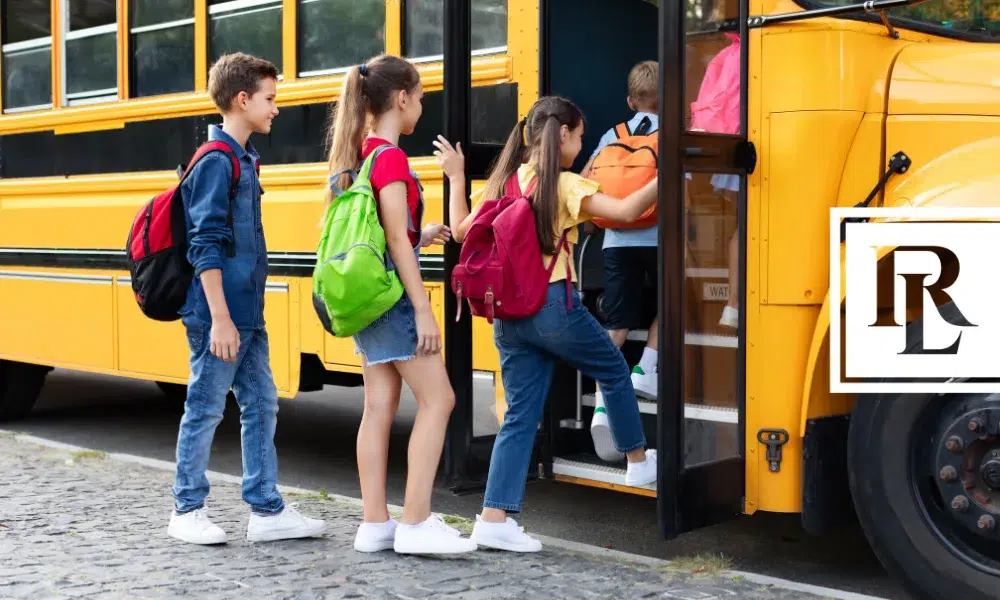

Every August, the streets that have been relatively quiet all summer suddenly fill with backpacks, bicycles, and buses. After settling into more relaxed driving habits since June, you might be caught off guard by the sudden stops, congested curb lanes, and unfamiliar foot traffic patterns. The sudden transition from the laid-back days of summer to the busier pace of the school year can lead to more accidents between vehicles, as well as between drivers and pedestrians. Fortunately, with a handful of deliberate, simple tips, you can adjust your habits and prevent many of these incidents.
Back-to-School Safety Tips for Drivers
Whether you have kids in school or are just trying to get to work on time, school schedules affect everyone. Almost everyone will pass through a school zone, stop for a bus, or come across kids crossing streets to get to the bus stop or school at least once. These kid-heavy areas bring sudden, extreme slowdowns. You must be on the lookout for children darting into traffic or playing as they cross the street. Arrival and dismissal are the heaviest traffic times, but schedules may vary day to day. Late starts, early dismissals, or even a single student running late can mean children are present outside the usual times.
A few practical steps you can take immediately:
- Check your regular routes for school zones so you can allow extra time to slow down.
- Leave a few minutes early to account for bus stops.
- Slow down and stay alert near school zones during arrival and dismissal, even if no children are visible.
- Yield to school bus stop arms, crossing guards, and law enforcement directing traffic.
- Clean your windshield and wear sunglasses to combat glare.
- Adjust your driving for fog, rain, frost, snow, or ice.
School Zone Driving Rules That Protect Children
If you’re near a school, you’re probably in a school zone. These areas are the roads surrounding a school, where kids are active before, during, and after school. Speed is greatly reduced in these areas to keep children safe. Failure to comply with these speed reductions and other school zone rules can result in significantly higher fines and more severe penalties than other traffic infractions.
- Slow down near schools and bus stops. Follow posted speed limits and be extra careful during arrival and dismissal times, when children are most likely to be near the street. However, even outside those hours, you should pay attention to your surroundings and adjust accordingly.
- Follow signs, signals, and crossing guards. Rules vary by district and state. Some use an amber flashing light, a “when children are present” restriction, or an all-day reduced speed provision. If you’ve recently moved or changed routes, you should confirm which applies to your local area. If you’re dropping off or picking up children, make sure you get into the appropriate lane early to avoid last-minute lane changes or turns.
- Avoid distractions in drop-off and pickup areas. These areas see the biggest groups of children moving between vehicles. Avoid phones, eating, drinking, or applying makeup while there, and if you’re passing through a school zone, watch out for parents making sudden lane changes or turns near entrances and exits.
How Can You Stay Safe Around School Buses?
There aren’t many things that are more frustrating than being stuck behind a bus. Slow or absent students can slow the bus down, as can other traffic in front of it. If you’re running late yourself, you might be tempted to ignore the stop signs, flashing lights, and extended arms. That would be extremely dangerous and could lead to you, a child, or others being injured or killed.
In 2023, the National Association of State Directors of Pupil Transportation Services (NASDPTS) estimated that more than 43.5 million drivers illegally passed school buses during the 2022–2023 school year. While not every incident resulted in an injury or death, each passing created a dangerous situation for children, parents, and bus drivers. Beyond the physical danger, these incidents can be scary and leave everyone involved wondering what could have happened.
Watch for Flashing Lights
You must stop for a bus with flashing lights regardless of your direction of travel. Flashing yellow means the bus intends to stop soon, so stop if you safely can. Flashing red means the bus is going to, has already, or is stopped, and passing is illegal.
Under Rhode Island’s School Bus Safety Enforcement Act § 31-51-1, violations can bring fines and license suspensions, and Rhode Island buses use stop-arm cameras for enforcement, so you’re not likely to get away with it. Massachusetts also fines and suspends licenses for passing a bus’s flashing red lights.
Know When to Stop
Throughout the United States, on two-lane roads and divided highways without a physical barrier or median, traffic in both directions must stop. On divided highways with a barrier or median, oncoming traffic doesn’t have to stop. You must remain stopped until the red lights go off and the bus moves again. Rhode Island requires a 50-foot following distance from a moving bus under R.I. Gen. Laws § 31-20-12, and safety experts recommend 20–30 feet when stopped. Massachusetts law requires drivers to stay 100 feet behind a school bus.
Why Passing a Stopped Bus Is Dangerous
Perhaps the only thing more annoying than being stuck behind a bus is being stuck behind one when it seems no one is getting on or off. However, buses stop for many reasons, including route timing or activity that the bus driver can see but you can’t.
Assuming that you can safely pass puts you, other drivers, and any children that may or may not be visible at risk. Every driver who decides to pass adds to that risk. If the bus is stopped for any reason, your best bet is to stay stopped where you are until the bus turns off the flashing red lights and starts moving again.
Pedestrian Safety for Students and Drivers
While drivers are primarily responsible for safety as they control vehicles that can cause severe injury or death, students of all ages can be proactive to protect themselves and try to avoid pedestrian-vehicle accidents.
- Cross at corners and marked crosswalks. These areas provide a predictable place with clear sightlines where both drivers and pedestrians should expect each other. Parents should discourage their children from taking shortcuts while practicing the safest route before school starts. These walks should help families estimate timing and teach kids safe steps to take while walking, such as looking for oncoming traffic or people using other forms of transportation, such as a bicyclist.
- Keep sidewalks and sightlines clear. Property owners should clear debris, trim hedges and trees away from travel zones, and keep vehicles from blocking sidewalks or roads.
- Yield properly at school crossings. Within school zones, you’ll usually see crosswalks, extra signage, or crossing guards that indicate where students typically cross the road. While you should pay attention throughout the entire zone, you should be particularly careful at these crossings.
Back-to-School Safety Tips Checklist
Before the First School Day
A little preparation before the first bell rings can help your child feel more confident and make the transition back to school safer and smoother.
- Walk or bike the route with your child, point out stop signs, traffic lights, and crosswalk signals, and practice making eye contact with drivers.
- Visit the bus stop together if your child rides the bus. Show your child where to stand (six feet back from the curb), where to cross, and remind them to wait for the bus to fully stop and for the driver’s signal.
- Reinforce that earbuds, headphones, and phones are off-limits while walking, biking, or standing near traffic.
- Confirm car and booster seats are properly secured, and seat belts are used correctly.
During Drop-Off and Pickup
Drop-off and pickup are often some of the busiest parts of the school day, so having a clear plan can help everyone stay safe and avoid confusion.
- Review daily instructions from teachers, bus drivers, or school officials on where to stand and go.
- Choose a family safe word for unexpected transportation changes, such as a different pickup person or needing to take the bus, so your child knows the change is legitimate and doesn’t react out of confusion or fear.
- Agree on a plan if you’re not at the school or bus stop at the appointed time.
- Look both ways before crossing the road, even when it is a one-way street.
For Drivers and Parents
Whether you’re driving your own kids to school or simply sharing the road with students and buses, a few extra precautions can help make school-day traffic safer for everyone.
- Get your vehicle checked for mechanical issues to avoid breakdowns.
- Identify schools and bus stops on your regular routes and allow extra time.
- Map an alternate route around schools and bus stops for days when you’re running late.
- Pull out of driveways and parking spots slowly, especially while in reverse, and watch for children on foot who might assume a parked car is not moving.
- Use a phone mount and Bluetooth/voice commands rather than handling your phone while driving.
- Obey all speed limits, in and out of school zones.
- Stop completely for crossing guards, and don’t move until all pedestrians are clear, and the stop paddle is lowered.
- Teach your teen about driving safety, both as a driver and as a passenger when another teen driver is behind the wheel.
Back-to-School Driving Safety Is Everyone's Responsibility
Whether you’re a student, a parent, or another driver sharing the road, back-to-school safety depends on everyone doing their part by obeying the laws, allowing extra time, and paying close attention to their surroundings.
If you or your child is hurt in an accident due to another driver’s negligence, Rob Levine Law is here to help. We can review your case, gather evidence, help you communicate with the insurance company, and take the necessary steps to secure the compensation you’re entitled to. With our Free Fee Guarantee, you won’t pay a penny unless you win your case. Contact our office today to learn more about your legal rights and options, and how we can help.